Dear Friend,
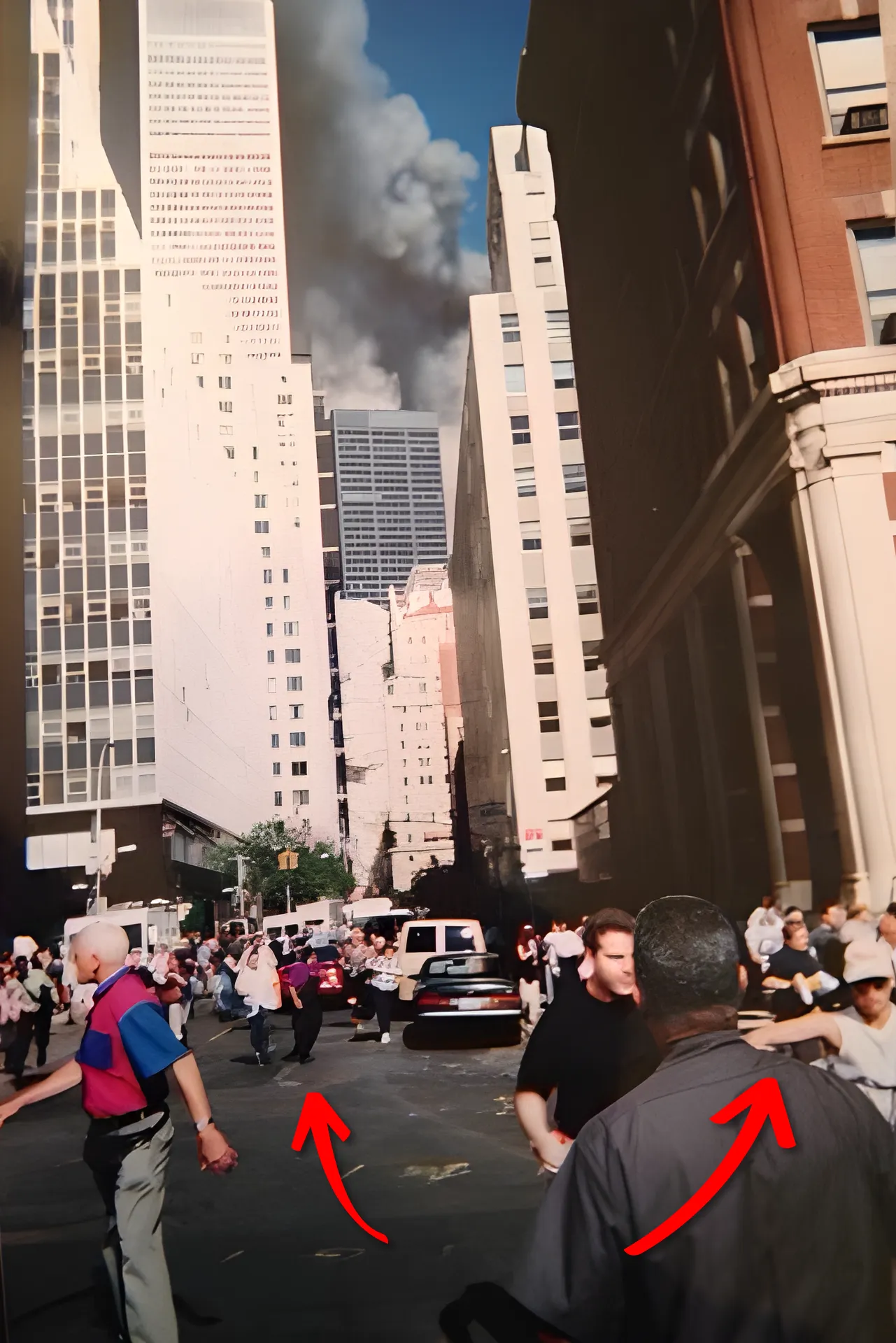
Take a look at this picture.
I took it on September 11, 2001.
It’s the last picture I took that day.
That gray cloud between the buildings is what is left of the World Trade Center.
At the moment I took this picture, the first tower was starting to come down.
First came the rumbling. A deep, loud noise I’d never heard before.
Then the smoke.
Then people started running toward me. You can see them in the picture.
Men in suits. Women in work clothes. Running right at me, away from that cloud.
So I turned around and started running with them.
I didn’t know if I’d see the end of that day.
I did. And I thank God for it every year.
Because if I hadn’t made it off that street, I never would have met my children.
I think about that a lot.
I think about the people who didn’t get to run.
And I think about what they would say if they could see America today.
Because here is something I never thought I’d live to see.
Twenty-two years after that attack, young Americans started passing around a letter on TikTok.
It was written by Osama bin Laden.
The man behind the murder of almost 3,000 Americans.
Kids who weren’t even born by 9/11 were reading his words out loud to their phones.

“TikTok ‘aggressively’ taking down videos promoting Bin Laden ‘letter to America’”
— The Guardian
And many of them praised him.
The newspaper that had kept the letter online took it down. TikTok started pulling the videos.
But the damage was done. Millions of young people had already seen it.
When I saw those videos, I felt sick.
Then it got worse.
The city I ran through that day is the city I grew up in. I was a poor kid from Queens.
Last year, that city elected a new mayor.
A few weeks before the election, he posted a smiling photo with a Brooklyn imam.
He called that imam “a pillar” of the community.
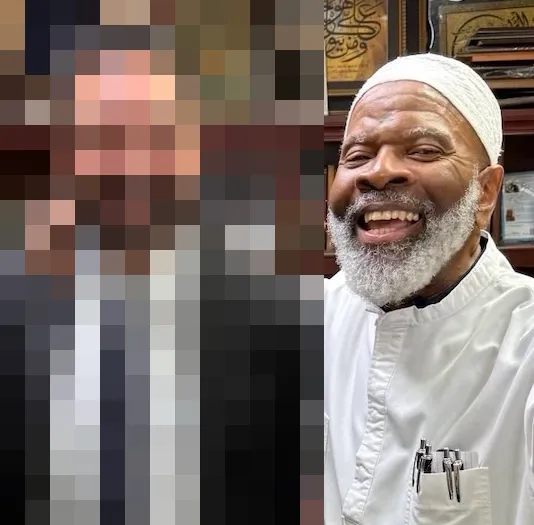
Back in 1995, federal prosecutors put that same imam on a list of possible unindicted co-conspirators in their terror case against the “Blind Sheikh.”
The imam was never charged.
But the Blind Sheikh was convicted. His crime? A plot to bomb New York landmarks.
My city’s new mayor looked at that history and saw a pillar of the community.
Now meet the second man.
He’s an online star. His videos have been viewed more than a billion times. Most of his fans are young men.
On one of his shows, he said this:
“Bro, I hate this country, dude.
I hate America.”
When people got upset, he didn’t back down.
He doubled down and said America was “The absolute worst country on the planet.”
This man has campaigned with a candidate for the U.S. Senate.
He has stood on stage with a member of Congress.
He was at the new mayor’s election-night party.
These two men are not a fluke.
They didn’t come out of nowhere.
Somebody spent years getting young Americans ready to cheer for them.
Somebody taught a whole generation of our children that America is the bad guy...
That our success was stolen…
That the people who built this country should feel ashamed.
And while that was happening, one tiny foreign country became the biggest foreign donor to American colleges.
Bigger than China. Bigger than Germany. And 16X bigger than Israel.
This same country owns one of the biggest news networks in the Arab world. And it has hosted the leaders of a terror group for years.
I’ll show you who. I’ll show you how much. And I’ll let you decide what they were buying.
Because I don’t believe any of this happened by accident.
In my opinion, these two men are the face of a movement.
It’s a movement that wants to replace the system that built this country. Free markets. Private property. The right to keep what you earn.
They want to replace it with socialism.
And I believe they are just getting started.
This November, we get a first look at how far this movement has spread.
There’s a very good chance that in 2028, the Democrats could pick a socialist to run for President.
That has never happened before in our history.
And if it happens, I believe our country will change in ways we may never undo.
So let me tell you why this matters to your money.
A movement like this doesn’t just go after statues and school books.
It goes after the things that make your savings grow.
- Your paycheck
- Your home
- Your retirement account
- The companies inside your 401(k)
I’ve worked on Wall Street since 1991. I’ve been through the dot-com crash, the 2008 crisis, and the Covid panic.
And I’ve learned one thing about money.
When money gets scared, it doesn’t wait around.
It moves. Fast.
For people who aren’t ready, I believe the next few years could be very hard.
But not everyone will lose.
There is a way to protect yourself.
And for people who act early, there may be a chance to come out ahead.
That’s what I want to show you today.
Now, I don’t expect you to take my word for any of this.
Everything I tell you today comes from public records, court papers, government data, and the words of these men themselves.
I’ll tell you where every fact comes from. Look it up. Check me.
I want you to.
Because once you see the whole picture, you won’t be able to unsee it.
You’ll look at the news differently. You’ll look at your kids’ schools differently.
And you’ll look at your own money differently, too.
Now, I know some people won’t like what I’m about to say.
I’ve been attacked before for telling people the truth.
But I stood on that street. I saw that cloud. I ran for my life.
I’m not going to stay quiet now.
WHAT’S HAPPENING TO AMERICA IS NO ACCIDENT
Twenty-five years ago, America knew who its enemies were.
We knew who attacked us. We knew why.
And for a while, we stood together. Flags on every porch. Strangers helping strangers.
Today, a lot of young Americans don’t remember any of that.
Many of them were never even taught it.
And into that empty space, a new set of ideas has moved in.
Ideas that say America is rotten at its core. That capitalism is a crime. That the only fix is to tear it all down and let the government run everything.
I know how that sounds. You might think I’m blowing this out of proportion.
I hope you’re right. I would love to be wrong about this.
But I’ve spent 35 years on Wall Street watching money, markets, and the people who move them.
And I’ve learned something.
When something big is coming, the warning signs show up long before most people notice.
They’re showing up now.
Here’s the part that worries me most.
The people pushing these ideas don’t think they’re the bad guys.
They think they’re saving America.
They believe that if they can just get enough power, they can make life fair for everyone.
I’ve read a lot of history. I can’t find a single time that kind of power worked out well for regular families.
Now, most people won’t connect the dots.
When prices jump, or jobs dry up, or their savings take a hit, they’ll call it bad luck.
The news will tell them nobody could have seen it coming.
But you’ll know better. Because I’m going to show you.
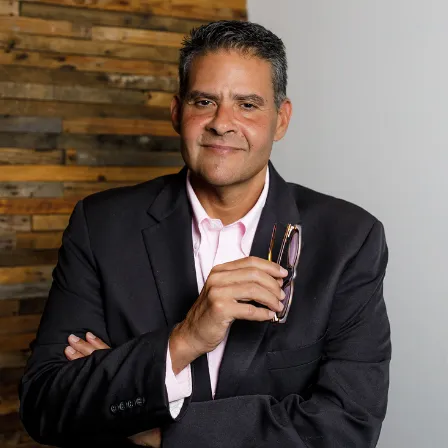
My name is Dylan Jovine.
I started on Wall Street in 1991. By the time I was 24, I had started my own brokerage firm. Our offices were at 100 Wall Street.
Within three years, I had a reputation for picking stocks right before they were taken over. Paramount, bought by Viacom three months after I recommended it. Chase Manhattan. Michigan National Bank.
| Company | Gain |
|---|---|
| Paramount | 100% |
| US Reinsurance | 70% |
| Chase Manhattan | 78% |
| Michigan National | 83% |
Today I run a research service called Takeover Targets.

And over the years, I’ve made a habit of seeing trouble before it hits.
On June 9, 2006, I wrote this:
“The market has no place else to go but down. It’s not a
question of ‘if’ it’s a question of ‘when.’”— Dylan Jovine, June 9, 2006
A year later, the market started to fall. By early 2009, the S&P 500 had dropped 47%.
That same year, I was invited to Washington to meet President Bush and Vice President Cheney.
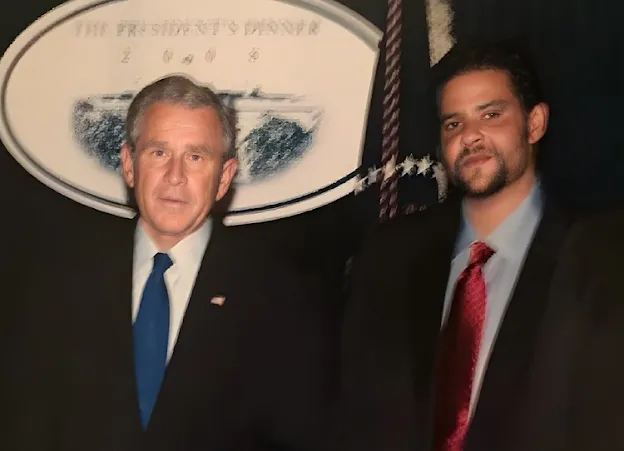
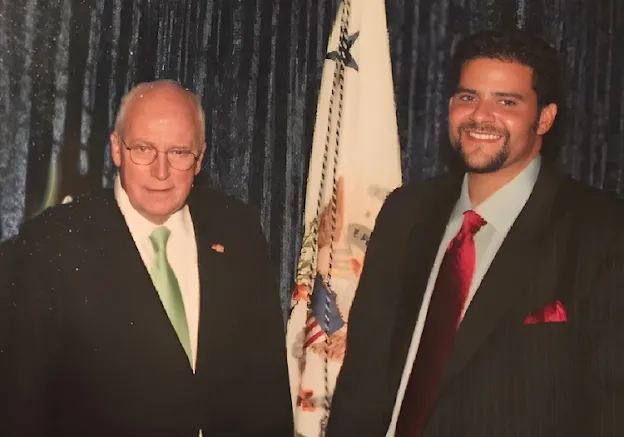
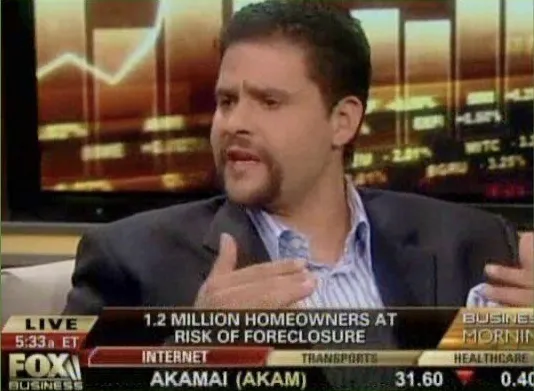
And when the crash came, Fox Business and CNBC asked me on the air.
But I didn’t just see the crash coming.
When the market hit bottom, I told people it was time to buy.
American Express at $14.24 a share. It went on to offer gains of 646%.
Starbucks at $8. It went on to climb as high as $56.
On March 12, 2020, in the middle of the Covid panic, when everyone was selling, I wrote this:
“FACT: When we get to the other side of this, the market will have a ‘SNAP-BACK’ rally because prices and interest rates are so cheap.”
— Dylan Jovine, March 12, 2020
Within six months, the market had roared back.
On July 15, 2021, I warned my readers:
“The world is entering a new cycle of war. Russia and China are trying to flip the international script just like Germany did in 1914.”
— Dylan Jovine, July 15, 2021
Seven months later, Russia invaded Ukraine.
And in February of 2022, while the Fed was still calling inflation “transitory,” I told my readers it would stick around a lot longer than they said.
It did.
More recently, I showed my readers Palantir. It offered gains of 362% in about 18 months.
And IonQ, which offered gains of 431% in seven months.
In all, I’ve made 30 recommendations that offered triple-digit gains.
Now, I’m not right every time. Nobody is.
But since we launched Takeover Targets, 93% of our closed recommendations have been winners. And across all of them, winners and losers, the average return offered was +19.4%.
Speaking up has cost me, too.
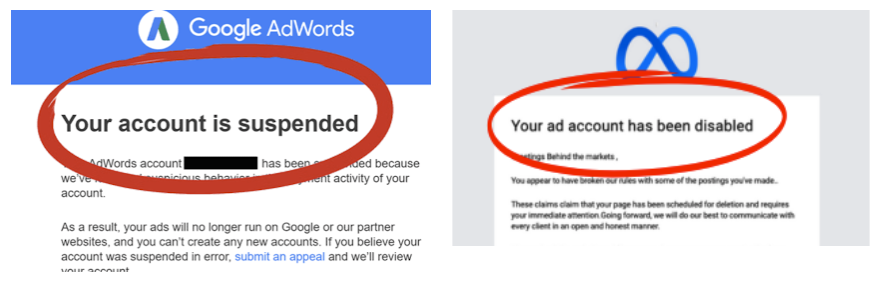
Google suspended my account. So did Facebook.
And when I started warning that China could invade Taiwan, the Chinese Communist Party sent a woman to talk to me.

I’m telling you this so you’re ready.
When a report like this gets out, the people it names will fight back. They’ll call me names. They’ll go after the messenger instead of the message.
If you see that happen, ask yourself one simple question.
Are they arguing with the facts? Or just with me?
Because the facts are the facts. And you can check every one.
Today, I’m going to show you what I’m doing to get ready.
And why I believe this mess has opened the door to one of the biggest opportunities I’ve seen in 35 years.
But first, I need to tell you why this is so personal to me.
WHY THIS IS PERSONAL
I grew up poor in Queens. My family lived on welfare and food stamps.
New York City gave a kid like me a shot.
In 1991, I got hired on Wall Street. I was so grateful, I never wanted to waste a single day.
So when someone attacks that city, I take it personally.
And I’ve seen it attacked twice.
The first time was in 1993.
Terrorists set off a truck bomb under the World Trade Center. Six people were killed. More than a thousand were hurt.
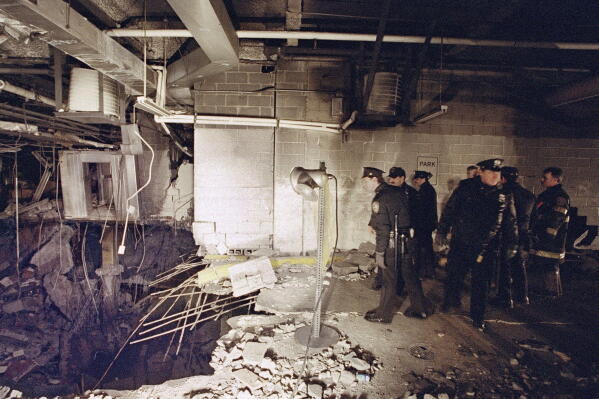
My girlfriend at the time was one of them.
She almost died. She spent days in the hospital.
Eight years later, I was the one running for my life.
That day, I lost friends. People I knew. People who went to work that morning and never came home.
And I thought about how close I came to working in that building myself.
So when I see a generation of young people cheering for the ideas of the men who did this... when I see our leaders cozying up to people with ties to that history...
I can’t stay quiet.
Now, I want to be very clear about something.
This is not about Islam.
I think Islam is a beautiful religion. The vast majority of Muslims in this country are wonderful, upstanding Americans. They love this country as much as I do.
This is about power.
A famous thinker named Friedrich Nietzsche believed that, at the root, almost everything people do is about power.
I think he was onto something.
Because what I’m against is anyone, of any faith or no faith at all, who uses socialism as a tool to grab power over other people.
That’s what I believe is happening right now.
And most people in my business won’t touch this story. It’s too hot. Too risky.
I understand why. But I can’t do that.
I stood on that street. I owe it to the people who didn’t make it home.
And I owe it to my own kids.
So let me show you exactly who I’m talking about.
HOW A GENERATION WAS TURNED AGAINST AMERICA
Before I tell you about these two men, you need to understand something.
They didn’t create this movement.
They’re riding a wave that’s been building for years.
Just look at the numbers.
Gallup has been asking Americans about socialism since 2010.
During this year, for the first time ever, more than 4 in 10 Americans said they have a positive view of socialism.
Among adults ages 18 to 34, it’s 57%.

“Adults aged 18 to 34 view socialism more positively than capitalism”
Among Democrats, it’s 65%. Only 35% of Democrats now say they have a positive view of capitalism.
Now, most Americans still like free enterprise. Small business is still hugely popular.
But think about that. This is the richest country in history. And most young adults now like socialism.
How did that happen?
I believe it starts in the classroom.
Every few years, the government tests what our kids know. It’s called the Nation’s Report Card.
In 2022, it tested eighth graders on U.S. history.
Only 13% were proficient.
Not even one in seven.
The same year, only 22% of eighth graders were proficient in civics. That’s how our government works.
These kids can’t tell you much about who we are, or how we got here.
So when someone tells them America is the bad guy, they have nothing to push back with.
Now here’s the part that should make every parent angry.
While our kids were forgetting our history, a foreign country was pouring money into American colleges.
It’s not China.
It’s Qatar. A tiny Gulf nation with about 3 million people.
The numbers come from the U.S. Department of Education.
Since reporting began, Qatar has sent American colleges more than $8 billion.
That makes Qatar the biggest foreign donor to American colleges. Bigger than China. Bigger than England or Germany.
In 2025 alone, Qatar sent more than $1.1 billion.
That’s about one out of every five foreign dollars our colleges got that year.
Now, to be fair, much of that money pays for American schools to run campuses in Qatar.
But ask yourself why.
Why would a country this small spend this much to get close to our top schools?
This is the same country that has hosted the political leaders of Hamas for years.
It’s the same country that owns Al Jazeera. That’s one of the biggest news networks in the Arab world.
“Why does Qatar host Hamas’s political office?”
— Al Jazeera
And here’s something else. Colleges were supposed to report this money on time.
Billions of dollars in foreign money came in late.
Now some of the biggest names in American schools are under federal investigation for it.
I can’t prove what Qatar wanted for its money.
But I know this: nobody spends billions for nothing.
And I know what I see on campus today.
Students chanting against their own country. Kids who were never taught our history, now sure they know “the truth.”

When you empty out a child’s head, somebody else gets to fill it.
That’s the wave these two men are riding.
And they are riding it all the way to power.
THE FIRST MAN: THE MAYOR
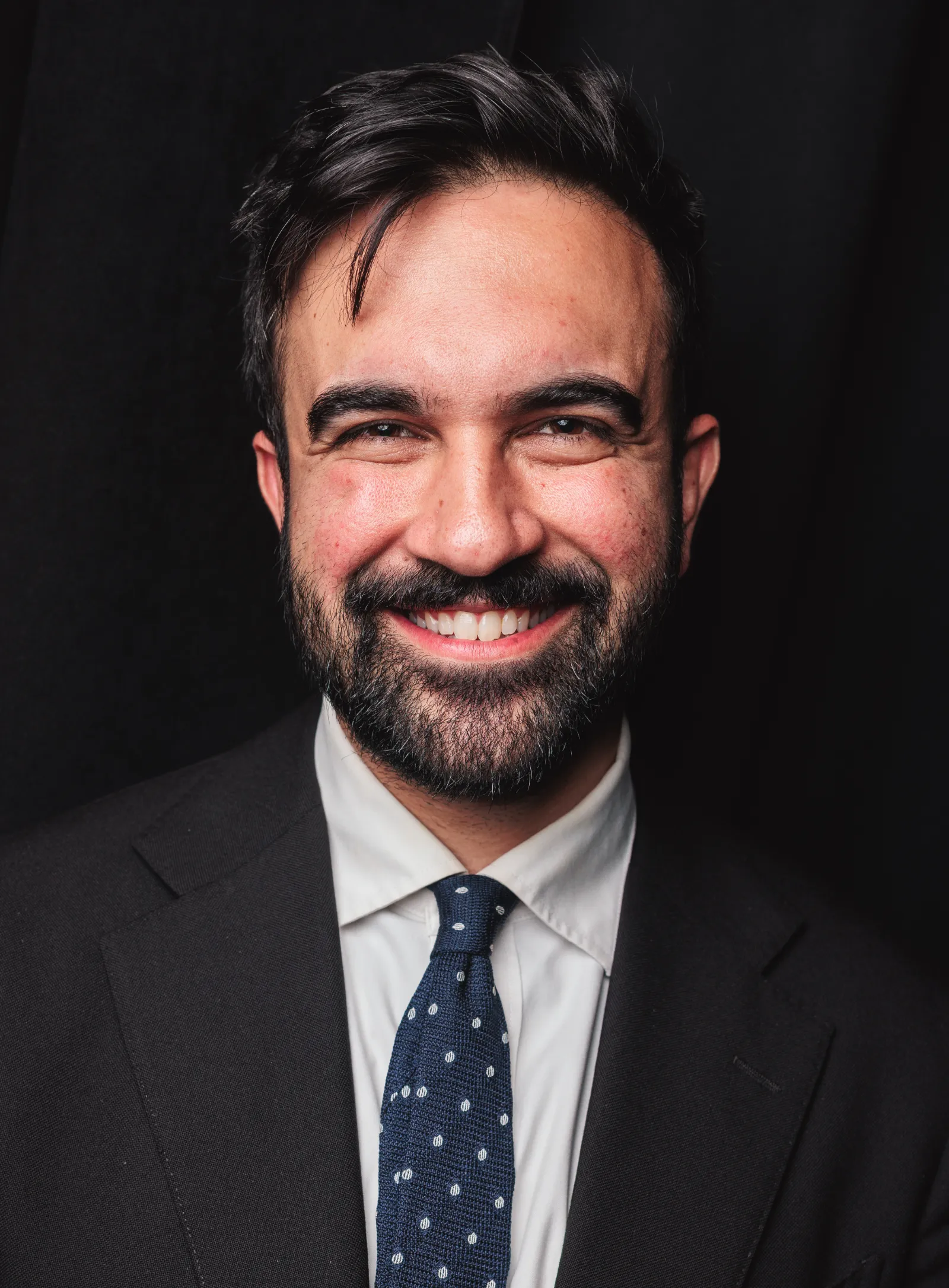
112th Mayor of New York City
His name is Zohran Mamdani.
On January 1, 2026, he became the 112th mayor of New York City.
He’s 34 years old. He’s a member of the Democratic Socialists of America.
And he now runs the most important city in the world for your money.
Think about what New York is.
It’s home to Wall Street. The New York Stock Exchange. Many of the biggest banks in the country.
It’s where companies go to raise money. It’s where the prices of your stocks get set every single day.
If America is the capital of capitalism, New York is its beating heart.
And the man in charge of it doesn’t believe in it.
You don’t have to take my word for that. Take his.
In June of 2025, on NBC’s Meet the Press, he was asked if billionaires have a right to exist.
He laughed. Then he said this:
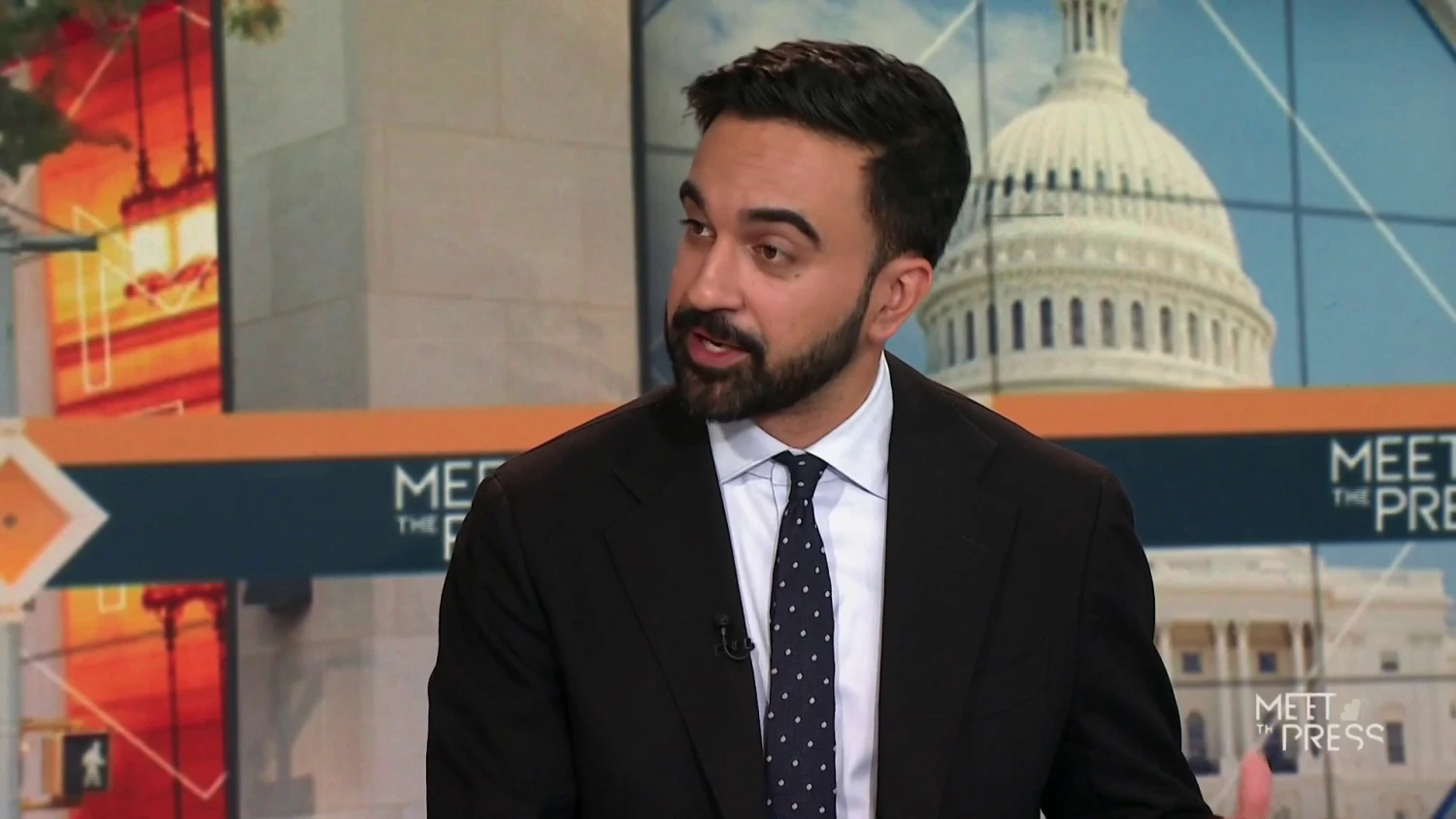
“I don’t think that we should have billionaires.”
Zohran Mamdani, NBC’s Meet the Press, June 29, 2025
Now go back to 2021.
Mamdani was speaking to a conference of the Democratic Socialists of America.
He talked about the ideas his movement believes in. Some were popular, he said. Some were not. Not yet.
And one of the ideas he named was...

“…the end goal of seizing the means of production.”
Zohran Mamdani, Democratic Socialists of America conference, 2021
That phrase isn’t new. It comes straight out of Karl Marx.
It means the government, or “the workers,” take control of the businesses that private owners built.
The factories. The stores. The buildings.
Mamdani admitted that idea didn’t have enough support “at this very moment.”
At this very moment.
That was five years ago. Now he’s the mayor.
Now, to be fair, Mamdani says his plans will help everyone.
On that same TV show, he said his vision was for “every single New Yorker, including business leaders.”
I believe he believes that.
Remember what I told you. The people pushing these ideas don’t think they’re the bad guys.
But good intentions don’t pay the bills.
So what has he done with the job?
Let’s start with rent.
About a million apartments in New York are “rent-stabilized.” A city board decides how much the owners can raise the rent each year.
A little over a month into his term, Mamdani had appointed a majority of that board.
And in June, the board did exactly what he promised on the campaign trail.
It froze the rent. On about a million apartments. For both one-year and two-year leases.

“New York City freezes rents for one million apartments in Mayor Mamdani victory”
Now, I understand why renters cheered. New York is brutally expensive.
But think about the people who own those buildings.
Many of them aren’t billionaires. They’re families. Retirees. Small landlords who put their life savings into one building.
Their taxes go up. Their insurance goes up. Their repair bills go up.
But the rent they can charge is frozen.
Landlord groups warned that a freeze would push old buildings into decline. Owners can’t fix what they can’t pay for.
Landlord groups say tens of thousands of rent-stabilized apartments were already sitting empty before the freeze. They say owners couldn’t afford to fix them up.
Now the math just got worse.
That’s what happens when the government decides what your property is allowed to earn.
And rent is just the beginning.
Mamdani campaigned on raising taxes on New Yorkers who earn more than $1 million a year. He wanted to raise the state’s top tax rate on corporations, too.
He pushed for a property tax hike of 9.5%.
The City Council pushed back. So did the governor.
But he still won something no mayor before him had been able to get.
A brand-new tax on second homes worth more than $5 million. It’s the first tax of its kind in the history of New York State.

“Inside Wealth New York passes Mamdani’s pied-a-terre tax. Here’s who pays and how much”
It’s expected to raise about $500 million a year.
Now, you might be thinking: So what? I don’t own a $5 million apartment in Manhattan.
Neither do I.
But here’s what I’ve learned in 35 years.
New York City now spends about $125 billion a year. That’s more than most states.
And it still came up billions short. Mamdani had a budget gap of more than $5 billion to close.
When a government spends that much and still comes up short, it goes looking for more money.
And a new tax never stays where it starts.
It always starts with “the rich.” Then the line moves.
And remember the Brooklyn imam I told you about?
The one prosecutors once named in their terror case against the Blind Sheikh?
Mamdani called him a “pillar” of the community. Weeks before the election.

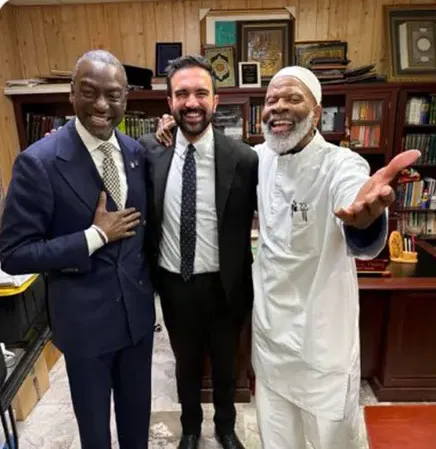
zohrankmamdani Today at Masjid At-Taqwa, I had the pleasure of meeting with Imam Siraj Wahhaj, one of the nation’s foremost Muslim leaders and a pillar of the Bed-Stuy community for nearly half a century. I was also joined by CM @dr_yusefsalaam of Harlem. A beautiful Jummah.
This isn’t about anyone’s religion. It’s about judgment.
When a man looks at that history and sees a pillar, what else is he willing to overlook?
And he’s not done.
He’s also promised free city buses. Free child care. And grocery stores run by the city government.
So far, he hasn’t gotten everything he wants. Albany hasn’t given him his income tax hike on millionaires.
But that’s not the point.
The point is that it’s working. And people across the country are watching.
Look at California.
This November, voters there will decide on a brand-new tax on billionaires. A one-time grab of 5% of everything they own.

California Proposition 40, One-Time Wealth Tax for State-Funded Healthcare, Education, and Food Assistance Programs Initiative (2026)
California Proposition 40, the One-Time Wealth Tax for State-Funded Health Care Programs Initiative, is on the ballot in California as an combined initiated constitutional amendment and state statute on November 3, 2026.[1]
A "yes" vote supports this initiative to levy a one-time 5% tax on the accumulated wealth of taxpayers and trusts with covered assets valued over $1 billion, including shares of capital stock, bonds or other evidences of indebtedness, and any legal or equitable interest, to fund state health care programs, food assistance programs, and public education.
A "no" vote opposes this initiative to levy a one-time 5% tax on the accumulated wealth of taxpayers and trusts with covered assets valued over $1 billion, including shares of capital stock, bonds or other evidences of indebtedness, and any legal or equitable interest, to fund state health care programs, food assistance programs, and public education.
Not 5% of what they earn. 5% of what they own.
California’s own Democratic governor opposes it. He’s worried it will drive the rich out of the state.
It’s on the ballot anyway.
That’s how these ideas spread. One city. Then one state. Then the next.
And if a candidate who shares these beliefs wins the Democratic nomination in 2028...
It won’t be one city anymore.
It’ll be the whole country.
But here’s the thing.
A mayor can pass laws. He can raise taxes. He can freeze rents.
What he can’t do is make an entire generation believe in it.
For that, you need somebody else.
You need a salesman.
And this movement has found one of the most powerful in America.
THE SECOND MAN: THE GUY WHO “DESPISES” AMERICA
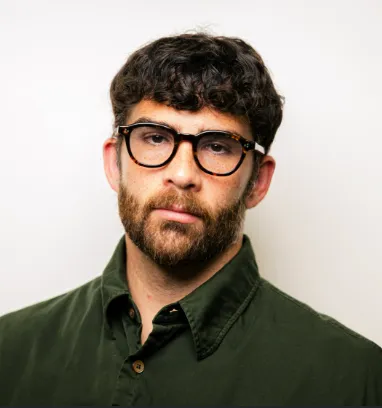
His name is Hasan Piker.
You may have never heard of him. Most people over 40 haven’t.
But if you have a son or grandson under 30, there’s a good chance he has.
Piker is a “streamer.” He sits in front of a camera and talks about politics for hours a day. Sometimes ten hours. Every day.
And millions of young people watch.
On Twitch, the biggest live video site in the world, he has more than 3 million followers.
On YouTube, his videos have been viewed more than 1.2 billion times.
He has described his average live audience as a crowd the size of Madison Square Garden. Every single day.
about 20,000 seats
I don’t know a single cable news host who talks to that many young men, that often.
Not on Fox. Not on CNN. Nobody.
That’s why the Democratic Party has embraced him. He reaches the young men they lost in 2024.
So what does he tell them?
Let’s let him speak for himself.
“Bro, I hate this country, dude.
I hate America.”
That’s from his show. And when a political ad used that clip against a candidate he supports, Piker didn’t apologize.
He went back on the air and said:
“It is my God-given and constitutionally protected right to say I hate America.”
Hasan Piker, American commentator and internet personality
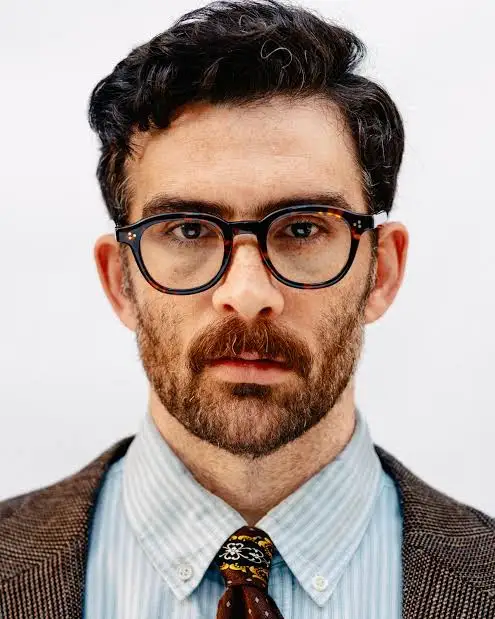
Just this year, he called the United States, and I’m cleaning this up, the most “dogs**t country on the planet.”
Now, remember what I told you at the start. I stood on Wall Street and watched the towers fall.
So this next one is hard for me to write.
Back in 2019, on his show, Piker said America “deserved” 9/11

“Twitch Suspends Popular Leftist Streamer After Controversial 9/11 Comments”
He walked it back after the backlash. Twitch suspended him for a week.
But he said it. And millions of young people heard it.
Then there’s how he talks about the terrorists of today.
He has said he would vote for Hamas over Israel.
He has said that whether or not rape happened on October 7 “doesn’t change the dynamic” for him.
I’m not going to argue with any of that. I don’t need to.
I just want you to know who’s talking to your grandkids for ten hours a day.
Now, Piker has an answer for all of this.
He told Rolling Stone that his show is, in some ways, “a performance.”
Fine. Maybe it is.
But the people standing next to him at campaign rallies aren’t performing.
They’re running for office.
And that’s what turned this from an internet show into a political machine.
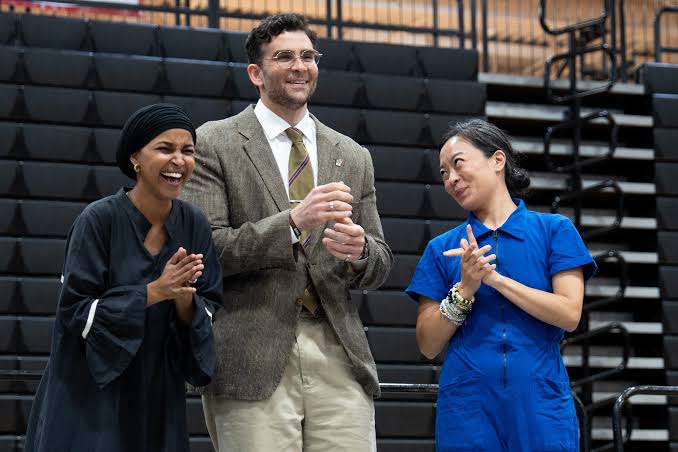
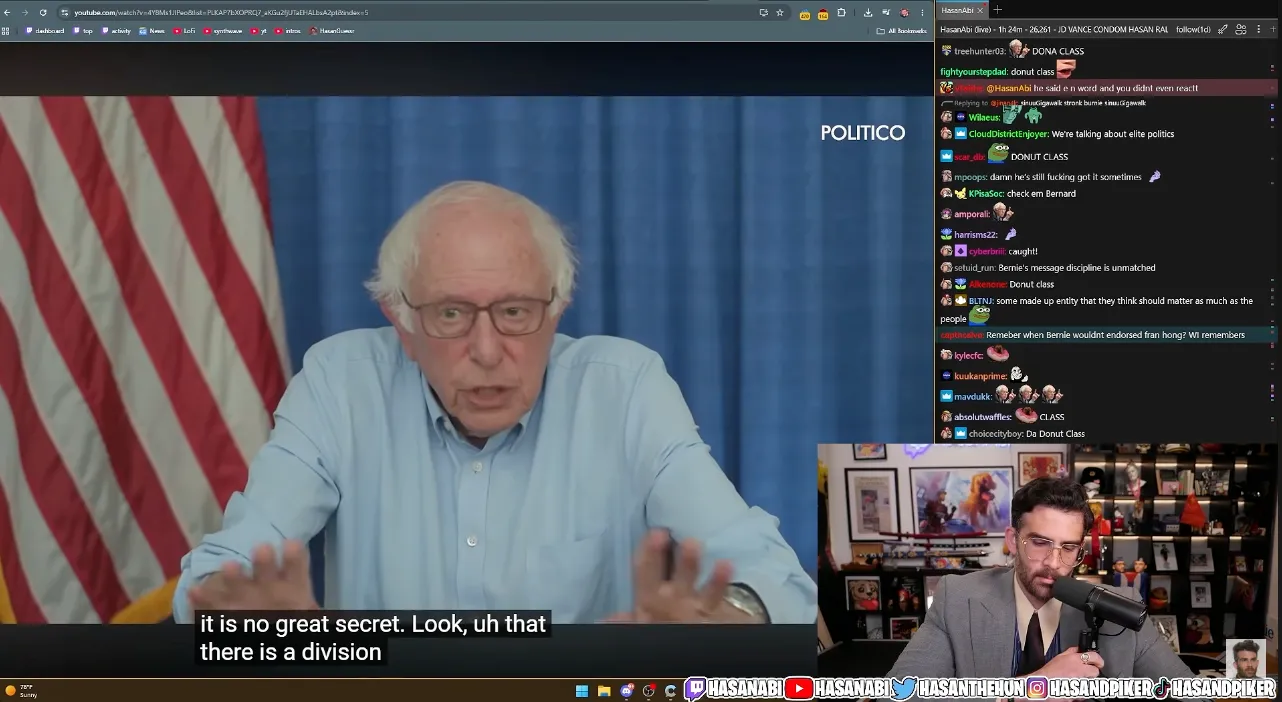
Here’s who has campaigned or appeared with Hasan Piker:

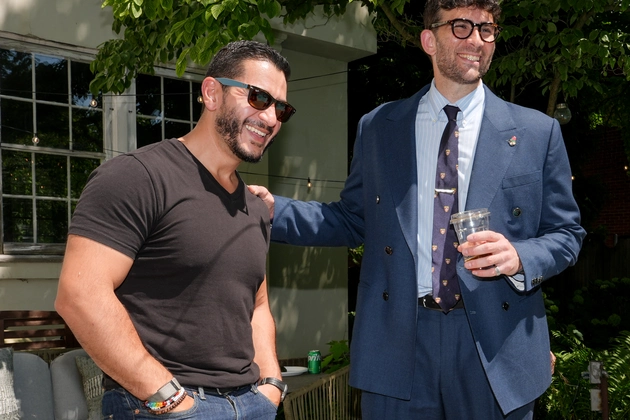


Zohran Mamdani, the mayor of New York, appeared on his show. Piker was at Mamdani’s victory party on election night.
Abdul El-Sayed, the Democratic candidate for U.S. Senate in Michigan, campaigned with Piker on the trail. His Republican opponent now calls Piker his “running mate.”
Francesca Hong, a Wisconsin state lawmaker who ran for governor, held a rally with Piker this August.
Congresswoman Ilhan Omar stood on that same stage.
Congresswoman Alexandria Ocasio-Cortez went on his show back in 2020 to get out the vote. She was with him at Mamdani’s victory party, too.
Senator Bernie Sanders has sat for an interview with him.
Want to know what these candidates would actually do?
Piker asked Hong on his show. It went like this.
Think about what that means for your money.
A ban on building the data centers that power the biggest companies in your 401(k).
Breaking up the companies that feed the country.
Government-run grocery stores competing with the ones you own shares in.
Yes. Yes. Yes.
And it goes deeper than the famous names.
This summer, Piker campaigned with a wave of first-time candidates who knocked off sitting Democrats in their own party’s primaries. In New York. In Colorado. In Michigan.
He spoke at the national convention of the College Democrats of America.
His message to those young Democrats?
“No more to Trumpism, but no more to the Democrats who compromise, who conciliate, and who betray us.”
Hasan Piker, American commentator and internet personality
Read that carefully.
He’s not just against Republicans. He’s against any Democrat who won’t go all the way.
This is how a fringe becomes a party.
Rolling Stone recently ran a big profile of him. The headline asked...
“Why Is Everyone Scared of Hasan Piker?”
Republicans certainly noticed. At the Texas GOP convention this year, his face went up on the big screen. They want every voter in America to know his name.
I understand why. But I’m not writing this to help one party beat the other.
I’m writing it because of what happens to your money if this movement wins.
Now, to be fair, not every Democrat is on board.
Senator Cory Booker said Piker’s “dangerous and hateful language” toward Jewish Americans “has no place in our civic discourse.”
The Democrat who beat Hong in Wisconsin called Piker’s statements “beyond the pale.” He said he would never appear with him.
Good for them.
But look at who’s winning the fights inside that party. It’s not the moderates.
The candidates who stood with Piker knocked off incumbents. The mayor who went on his show won New York.
When El-Sayed was asked on national TV if he’d keep campaigning with Piker, he didn’t back away.
And the party’s most famous young star, Ocasio-Cortez, was asked about all of this.
Her answer? She said it was “ludicrous” that Congress was spending so much time on “a Twitch streamer.”
Her complaint wasn’t about what he said. It was about how much time Congress was spending on it.
That’s the pattern. The people who share his beliefs stand with him. The people who don’t look away.
So let me put this all together for you.
You have a mayor running the financial capital of the world who wants “the end goal of seizing the means of production.”
You have a salesman with a daily audience the size of an arena telling young men that America is the worst country on earth.
You have a foreign government pumping billions into the colleges those young men attend.
And you have a generation that was never taught enough history to know any better.
None of these men are hiding. They’re saying it out loud.
They believe they’re saving America. They believe you and I are the problem.
And in November, and again in 2028, they’re going to find out how many Americans agree with them.
WHICH SIDE ARE YOU ON?
I know most of what I’ve told you today is dark.
It may feel like there’s nothing you can do.
Two men with this much power. A generation that’s already been convinced. A movement with real wins under its belt.
But I didn’t write this to scare you.
I wrote it because their plan has a hole in it.
A hole that’s been there from the start.
And if you understand it, you can do more than protect yourself.
You can come out ahead.
Here’s the hole.
Everything this movement wants to do depends on one thing.
Money staying put.
Rent freezes only work if the landlords stay. Millionaire taxes only work if the millionaires stay. City-run grocery stores only work if the private ones don’t leave first.
“Their whole plan assumes that the money they want to take will sit still and wait to be taken. It won’t. It never has.”
— Dylan Jovine
I’ve been on Wall Street for 35 years. I’ve seen what money does when it feels threatened.
It doesn’t argue. It doesn’t protest. It doesn’t wait for the next election.
It leaves.
And when it leaves, it goes somewhere.
That “somewhere” is where I’m about to take you.
Because the biggest transfer of wealth in this country isn’t the one these two men are planning.
It’s the one that’s already happening. Quietly. Out of their cities and into places they can’t reach.
The people who see it early can position themselves in front of it.
The people who don’t will be left holding what’s left behind.
So this is where you have to decide.
You can ignore what you’ve seen today. Most people will.
Or you can do what I’m doing with my own money.
Let me show you exactly what that is.
THE BILL COMES DUE
Before I show you where the money is going, I need to show you what’s chasing it.
Because this movement doesn’t just freeze rents and raise taxes.
It changes the price of money itself.
Here’s how.
Every program these people promise costs money. Free buses. Free child care. City-run grocery stores. Mamdani’s own estimate for his plan was about $9 billion a year. For one city.
Now picture that in 20 cities. Then picture it in Washington.
Governments don’t have money. They get it two ways. They tax it, or they borrow it.
When they tax it, the money leaves. We just saw that in the IRS data. The more they tax, the more leaves, the less they collect.
So they borrow.
Our federal government already owes more than $37 trillion. This year, the interest alone will cost more than $1 trillion. That’s more than we spend on the military.
Every new dollar of promises means another dollar of borrowing. And every dollar of borrowing means the government has to find someone to lend it.
To find that lender, it has to pay more. That means higher interest rates.
And higher interest rates are poison for stocks.
When money costs more, every company’s profits are worth less. Every mortgage costs more. Every car loan. Every credit card.
I’ve seen this movie before. So have you, if you’re old enough.
The last time America drifted this way was the late 1960s and 1970s.
Big new government programs. A war paid for with borrowed money. Politicians who promised everything and taxed everyone.
Here’s what happened to the stock market.
In 1966, the Dow Jones was at about 1,000.
In 1982, sixteen years later, it was still at about 1,000.
Sixteen years. Zero growth.
And that’s before inflation. After inflation, an investor who bought in 1966 had lost about two-thirds of their money by 1982.
Interest rates went from about 4% to almost 16%.
Gold went from $35 an ounce to $850.
The people who owned stocks got crushed. The people who owned real things, land, energy, gold, got rich.
Now, I’m not telling you it will happen exactly that way again. Nobody knows that.
But I am telling you that the ingredients are the same. And this time, we’re starting with $37 trillion in debt instead of a surplus.
In my opinion, if this movement wins in November, and again in 2028, that’s the direction we’re headed.
Higher taxes. More borrowing. Higher rates. And a stock market that goes nowhere for a very long time.
So the question isn’t just “where is the money going?”
It’s “what holds its value when the money gets expensive?”
And it turns out those are the same answer.
THE GREAT MONEY MIGRATION
Every year, the IRS tracks where Americans move. And how much income moves with them.
The newest numbers tell one story.
Money is leaving the places this movement controls. And it’s landing in the South.
In the most recent year of data, New York lost $9.9 billion in income to other states. California lost $11.9 billion. Illinois lost $6 billion.
Where did it go?
Florida gained $20.6 billion. Texas gained $5.5 billion. South Carolina, $4.1 billion. North Carolina, $3.9 billion. Tennessee, $2.8 billion.
That’s one year.
Over the last ten years, New York has lost $111 billion in income to other states. California has lost $102 billion.
Florida has gained $196 billion. Texas, $54 billion.
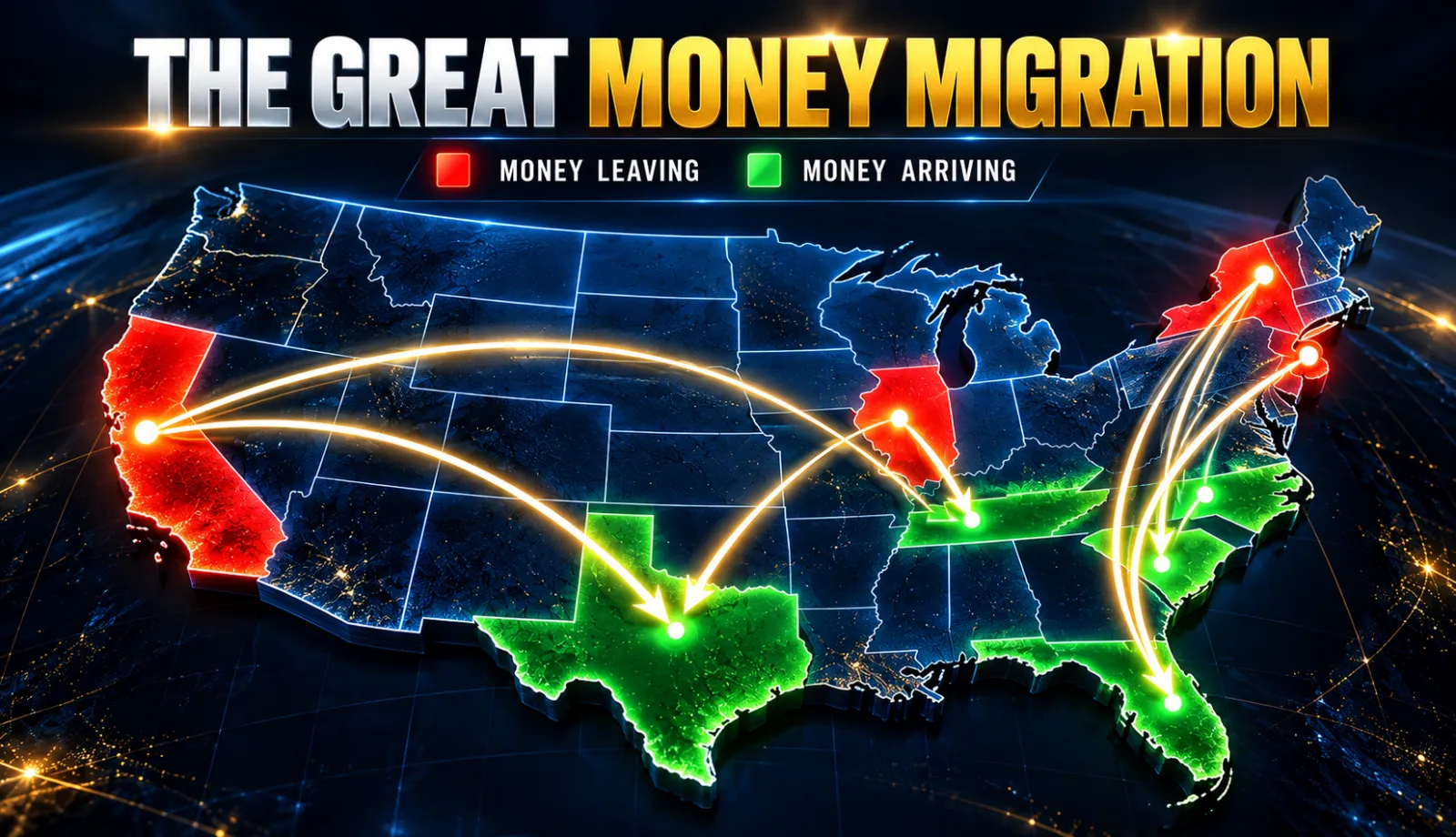
That’s not a trend. That’s a stampede.
And the people leaving aren’t the ones who need help. They’re the ones paying the bills.
For every new resident Florida gained, on net, it gained about $185,000 in income.
Here’s the part that should worry every New Yorker.
In the latest data, Manhattan actually gained people from other states. But it still lost almost $1 billion in income.
Read that again. More people came in. Less money came with them.
The rich left. Everyone else moved in behind them.
Now, remember, these numbers stop in 2023. Before Mamdani was even on the ballot.
So what’s happened since?
In March, one of the biggest investment firms in the world sent a memo to its top people.
The firm manages about $900 billion. Its headquarters is in Midtown Manhattan.
The memo asked one question: “Would you rather move your family to Texas, or to Florida?”
Not “Do you want to leave New York?” That part was already settled.
That firm isn’t alone.
The largest bank in America now has more workers in Dallas than in New York City. Its CEO told shareholders this year that the trend “will likely continue.”
Another Wall Street giant is building a massive new campus in Dallas. It opens in 2028.
One of the biggest hedge funds in the world moved its headquarters from Chicago to Miami. Another moved from Manhattan to West Palm Beach.
There’s a name for this now. They call it “Wall Street South.”
THE GREAT MONEY MIGRATION: WHO’S ALREADY GONE
Where America’s money has been going
Elon Musk moved himself to Texas in 2020. Then he moved Tesla’s headquarters from California to Austin (2021), SpaceX to Starbase, Texas (2024), and X, the old Twitter, out of San Francisco to Texas (2024).
Citadel, Ken Griffin’s $60-billion-plus hedge fund, left Chicago for Miami in 2022.
Elliott Management, Paul Singer’s hedge fund, moved from Manhattan to West Palm Beach.
Icahn Enterprises left New York for Florida in 2020.
ARK Invest, Cathie Wood’s firm, left New York for St. Petersburg, Florida.
AllianceBernstein moved its headquarters from Manhattan to Nashville.
Jeff Bezos left Seattle for Miami in 2023.
Chevron left California after 145 years and moved its headquarters to Houston in 2024.
Oracle left California for Austin, then moved again to Nashville in 2024.
Hewlett Packard Enterprise left Silicon Valley for Houston.
Charles Schwab left San Francisco for Westlake, Texas.
Caterpillar left Illinois for Irving, Texas, in 2022.
Toyota North America left California for Plano, Texas.
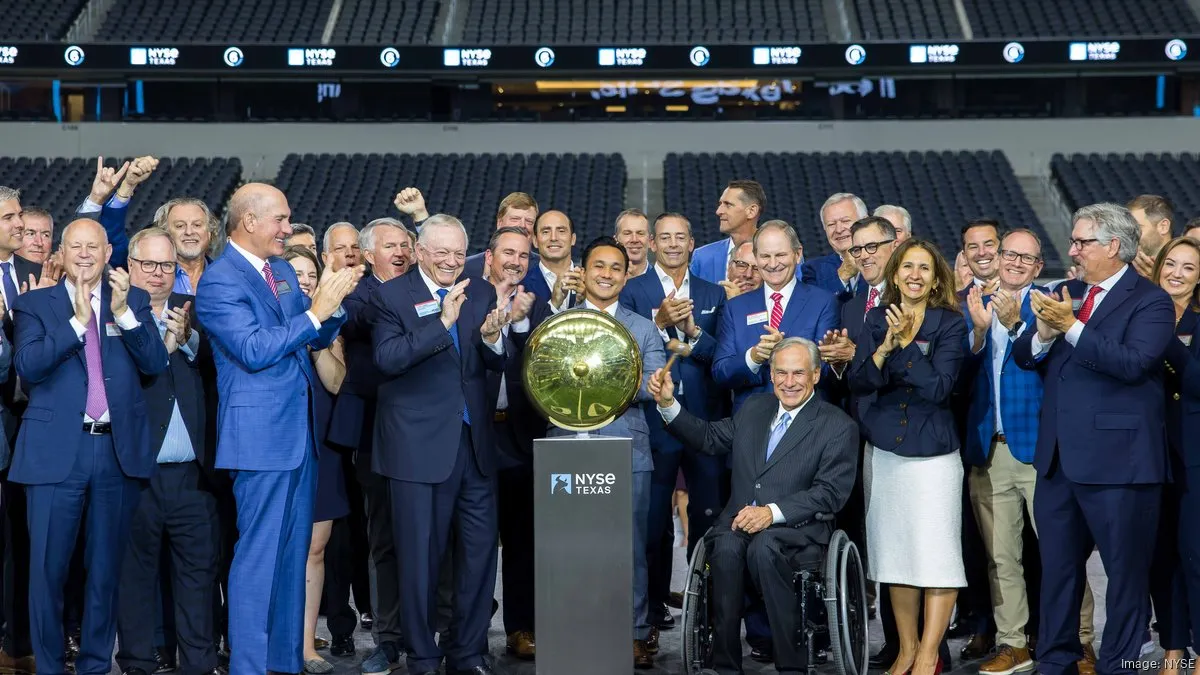
Goldman Sachs is building a Dallas campus for thousands of workers, opening in 2028.
JPMorgan now has more employees in Dallas than in New York City.
The New York Stock Exchange opened “NYSE Texas” in Dallas in 2025. A brand-new Texas Stock Exchange is launching behind it.
Even the stock exchange is moving south.
And the mayor of Dallas said out loud what everyone in finance was thinking after Mamdani won.
“What was already a trickle is going to turn into a flood.”
— ERIC JOHNSON, MAYOR OF DALLAS
Now, to be fair, New York isn’t empty. Offices in Manhattan are still getting leased. The city is still the financial capital of the country.
But the direction is clear. And the pace is picking up.
Because these firms aren’t just moving people. They’re moving their money. Their tax dollars. Their spending. Their power.
And every dollar that leaves has to land somewhere.
That’s where you come in.
FOLLOW THE MONEY
- HOUSING
When a family moves from New York to Nashville, they need a place to live.
Somebody owns that building.
- POWER
When a bank moves 5,000 workers to Dallas, they need power.
Somebody owns the pipeline that brings it.
- ENERGY
When a whole region grows that fast, it needs energy out of the ground.
Somebody owns the rights to it.
And here’s the key.
Those owners get paid. Every quarter. In cash.
Not a promise of growth someday. Real income, now, from people and businesses who are moving in and using what they own.
But remember what’s chasing the money. Higher taxes. Higher rates. A market that could go nowhere for years.
So I didn’t stop at “who gets paid by the migration.”
I asked a harder question. Who gets paid by the migration, and gets paid more when money gets expensive?
That rules out a lot.
Most real estate companies fall when rates rise. Most banks do, too. Anything with a lot of debt gets hurt.
What’s left is a small group of companies that own things nobody can tax away, print more of, or freeze.
Pipelines that get paid a toll no matter what gas costs.
Royalties on oil and gas that pay more when prices rise.
Gold that’s been holding its value since before there was a Federal Reserve.
And land in the places the money is landing.
That’s what I own. And that’s what I’m going to show you.
I’m not talking about hot tech stocks or crypto.
I’m talking about the toll booths of the South. The companies that get a cut of everything the migration needs, and get a bigger cut when inflation comes.
Now think about the timing.
This November, the whole country votes. If this movement wins big, the moving trucks won’t slow down. They’ll speed up.
And if a socialist wins the Democratic nomination in 2028, every business owner in a blue state will be asking the same question that investment firm asked its people.
Texas, or Florida?
Here’s what makes this different from most opportunities.
You don’t need the movement to win for this to work.
The money has been moving for a decade. It moved under Republicans. It moved under Democrats. It moved before Mamdani, and it’s moving faster now.
Every election just decides how fast.
That’s what I mean when I say their plan has a hole in it.
They can tax what stays. They can’t tax what leaves.
And the people who own where it’s going get paid either way.
Now let me show you exactly what I mean.
THE SMART MONEY IS ALREADY MOVING
I’m not the only one who sees this.
The biggest banks are building campuses in Dallas, not Manhattan.
The New York Stock Exchange itself, the symbol of Wall Street, opened a Texas exchange last year.
And central banks around the world have been buying gold at the fastest pace in more than 50 years. They see the same debt numbers I do.
When the Stock Exchange moves to Texas and the central banks buy gold, the argument is over.
But here’s what most investors miss.
You don’t have to buy a building in Nashville or an oil well in Texas to get paid by this. You don’t need a million dollars.
There are companies that already own the pipelines, the royalties, the gold streams, and the land. They’re publicly traded. They pay you in cash.
I’ve spent the last several months going through them one by one. Looking at what they own, what they pay, and what happened to them the last time rates went up and stocks went down.
I narrowed it down to three for your first report. And one more for your second.
THE POWER LINE
Let me start with the one I think of as the anchor.
People and businesses can move. But they can’t bring the power grid with them.
That has to be built. And it has to be fed.
My first company owns the biggest natural gas pipeline in America.
It’s about 10,000 miles long. It runs from the Texas Gulf Coast, up through Louisiana, Mississippi, Alabama, Georgia, the Carolinas, and Virginia, all the way to New York City.
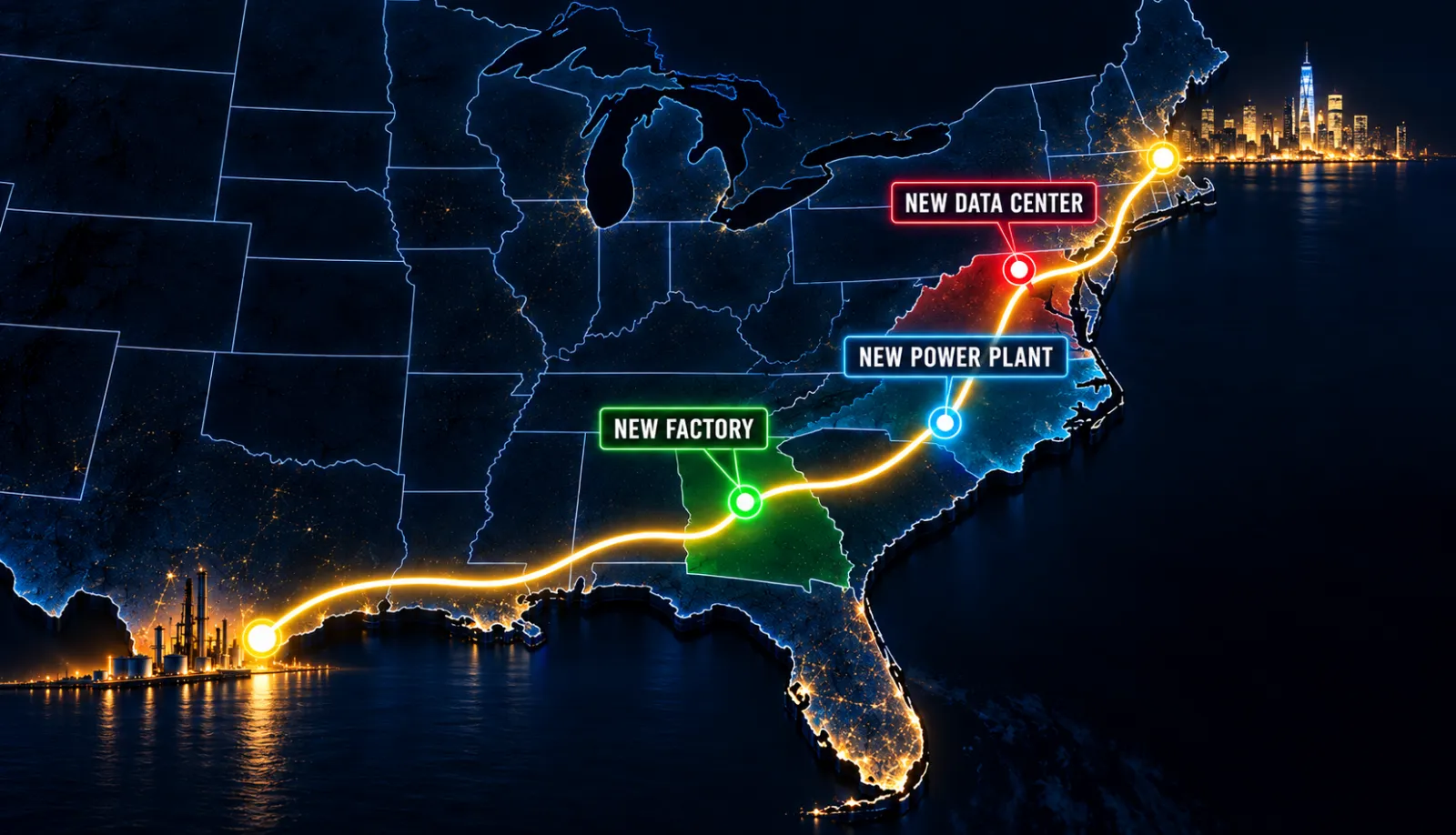
Think about that route. It’s a straight line through almost every state on the winning side of the Great Money Migration.
When a new factory opens in Georgia, this pipeline feeds it. When a new data center opens in Virginia, this pipeline feeds it. When a new power plant opens in the Carolinas, this pipeline feeds it.
The company says it moves about a third of all the natural gas used in America.
And here’s my favorite part.
That pipeline ends in New York City. A big share of the gas that heats New York apartments and runs New York power plants comes through it.
“Mamdani can freeze the rent. He can’t freeze the gas.”
— Dylan Jovine
His city is this company’s customer. And it has no other choice.
The company gets paid to move the gas, like a toll road. It doesn’t care what the price of gas is. Most of its contracts run for years.
That’s what makes it different from a bank or an apartment building when rates rise. Nobody stops heating their home because the Fed raised rates.
Unlike a lot of pipeline companies, this one is a regular corporation. That means you get a normal 1099 at tax time. No K-1.
It pays a yield of about 3.5%, and it’s raised the payout every year for the better part of a decade.
I’ll be straight with you about the risk. Pipelines carry debt, and higher rates make that debt cost more over time. Building new pipe means fighting regulators and lawsuits.
But this company has been winning those fights. And every new mile is another toll booth on the road south.
I call it “The Power Line.”
THE ROYALTY COLLECTOR
My second company owns something even better than a pipeline.
It owns the rights to what’s under the ground.
It holds mineral rights across some of the richest oil and gas land in America, the Permian Basin of West Texas and New Mexico.
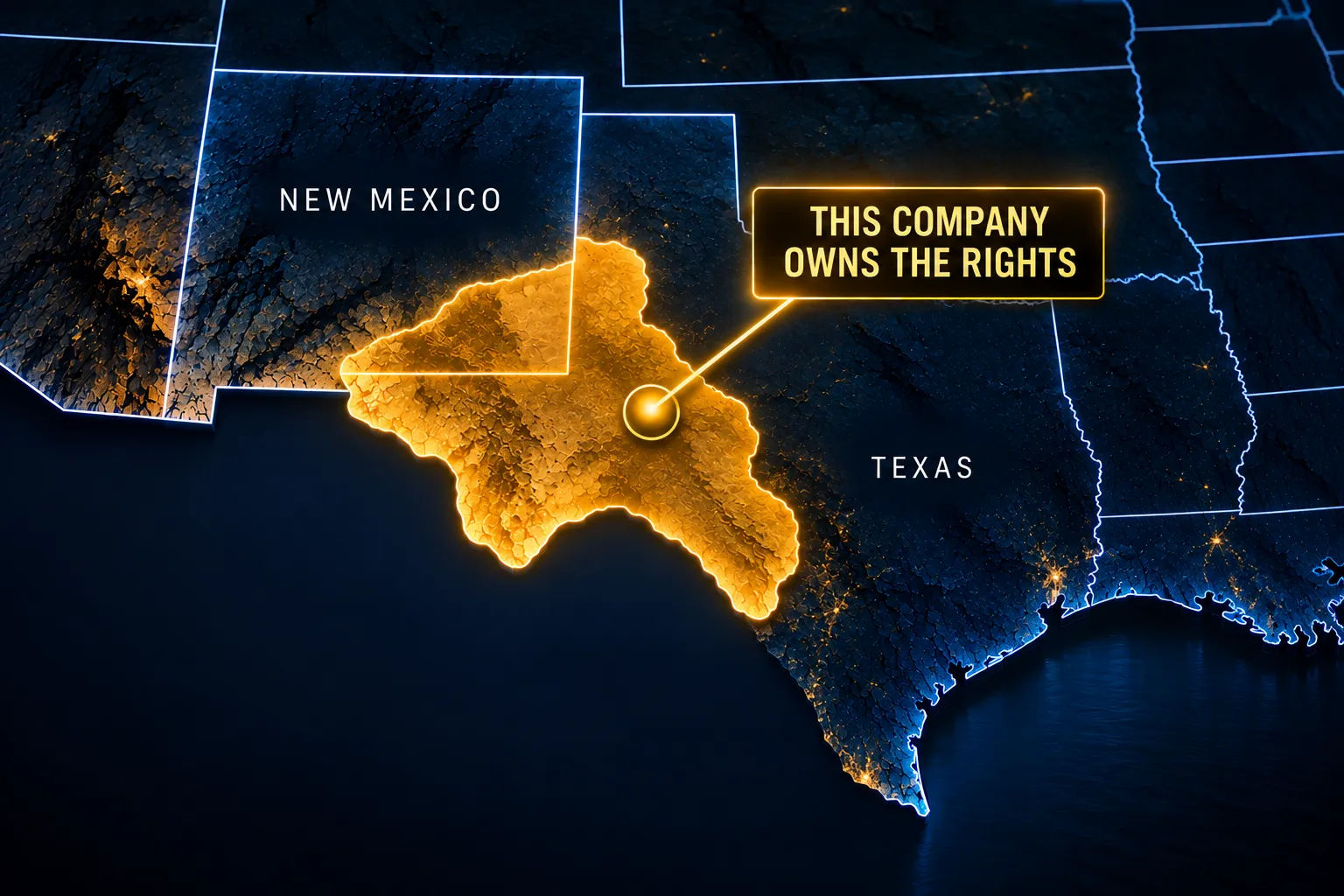
It doesn’t drill. It doesn’t own rigs. It doesn’t hire crews.
The oil companies do all of that. And every time they pull a barrel out of the ground, this company gets a cut. Off the top. Before expenses.
Think about what that means when inflation comes.
When oil goes from $70 to $100, a driller’s costs go up, too. Steel. Labor. Fuel. Its profit might barely move.
But a royalty owner has almost no costs. When the price goes up, the check goes up. Almost dollar for dollar.
In the 1970s, oil went from $3 a barrel to almost $40. The people who owned royalties on Texas oil got rich without lifting a finger.
This company pays a dividend every quarter. Part of it is fixed. Part of it rises and falls with oil and gas prices. When prices are high, the check gets big.
And here’s the part that matters at tax time. In 2024, this company changed its structure to a regular corporation. That means a 1099, not a K-1.
You get royalty income without the tax headache that usually comes with it.
And it's a buyer, not a seller. In 2025, it bought one of its biggest rivals in a deal worth about $4.1 billion. That's how this business works now. The big collectors keep buying the small ones.
Now, the honest part. The payout moves with prices. When oil falls, the check shrinks. That’s the trade-off, and it’s a real one.
But that’s exactly why I want it in a world of higher inflation. It’s the one company in this report that gets paid more, not less, when the price of everything goes up.
I call it “The Royalty Collector.”
THE GOLD TOLL BOOTH
Now for the one they can’t print.
My third company is the closest thing to owning gold without the risks of owning a gold mine.
It’s what’s called a royalty and streaming company.
Here’s how it works. When a mining company needs money to build a mine, this company gives it to them. In return, it gets a percentage of everything that comes out of the ground. Forever.
It doesn’t dig. It doesn’t run the mine. It doesn’t pay for the trucks or the workers or the fuel.
It just collects.
Today it holds royalties on more than 400 mines and projects around the world. Most of them pay in gold.
It has no debt. Not a dollar.
And it has raised its dividend every single year since it went public in 2007. Through the 2008 crash. Through Covid. Through everything.
Think about why this matters right now.
Gold has been money for 5,000 years. It’s what people run to when governments borrow too much and print too much. It went from $35 to $850 the last time America went down this road.
And this company gets a cut of gold production without the costs that eat up a gold miner’s profits. When gold rises, its profits rise faster than the metal itself.
I’ll be straight with you. The yield is small, about 1%. You don’t buy this for income.
And when gold falls, this stock falls with it.
But if you believe, as I do, that this movement means more borrowing and more printing, this is the cleanest way I know to own the one thing they can’t create more of.
I call it “The Gold Toll Booth.”
These three companies are in your first report. It’s called:
The Toll Booths of the South:
3 Companies That Get Paid MoreWhen Money Gets Expensive
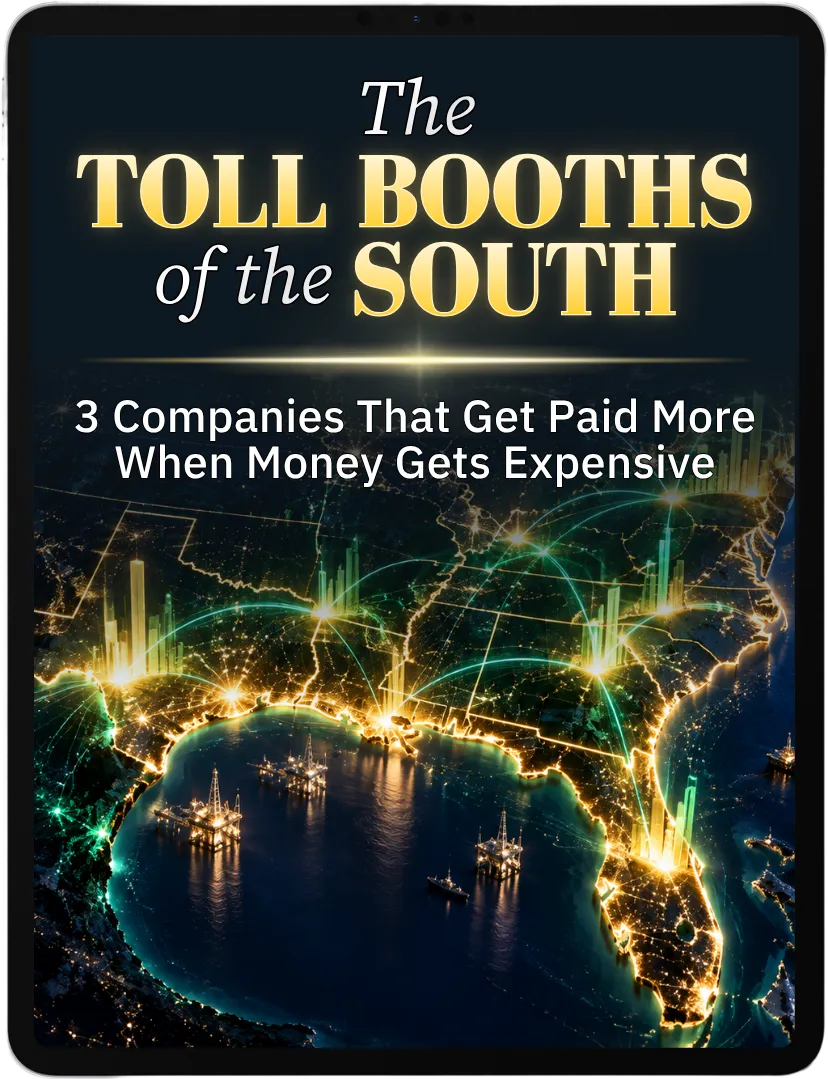
I’ll tell you how to get it in a moment.
But first, I want to show you one more opportunity. It’s smaller. It’s riskier. And it’s the one I find most exciting.
THE FLORIDA LANDOWNER
Everything I’ve shown you so far collects a cut of what already exists.
This company owns the ground the next wave will be built on.
It’s based in the Florida Panhandle. And it owns about 170,000 acres of land there.
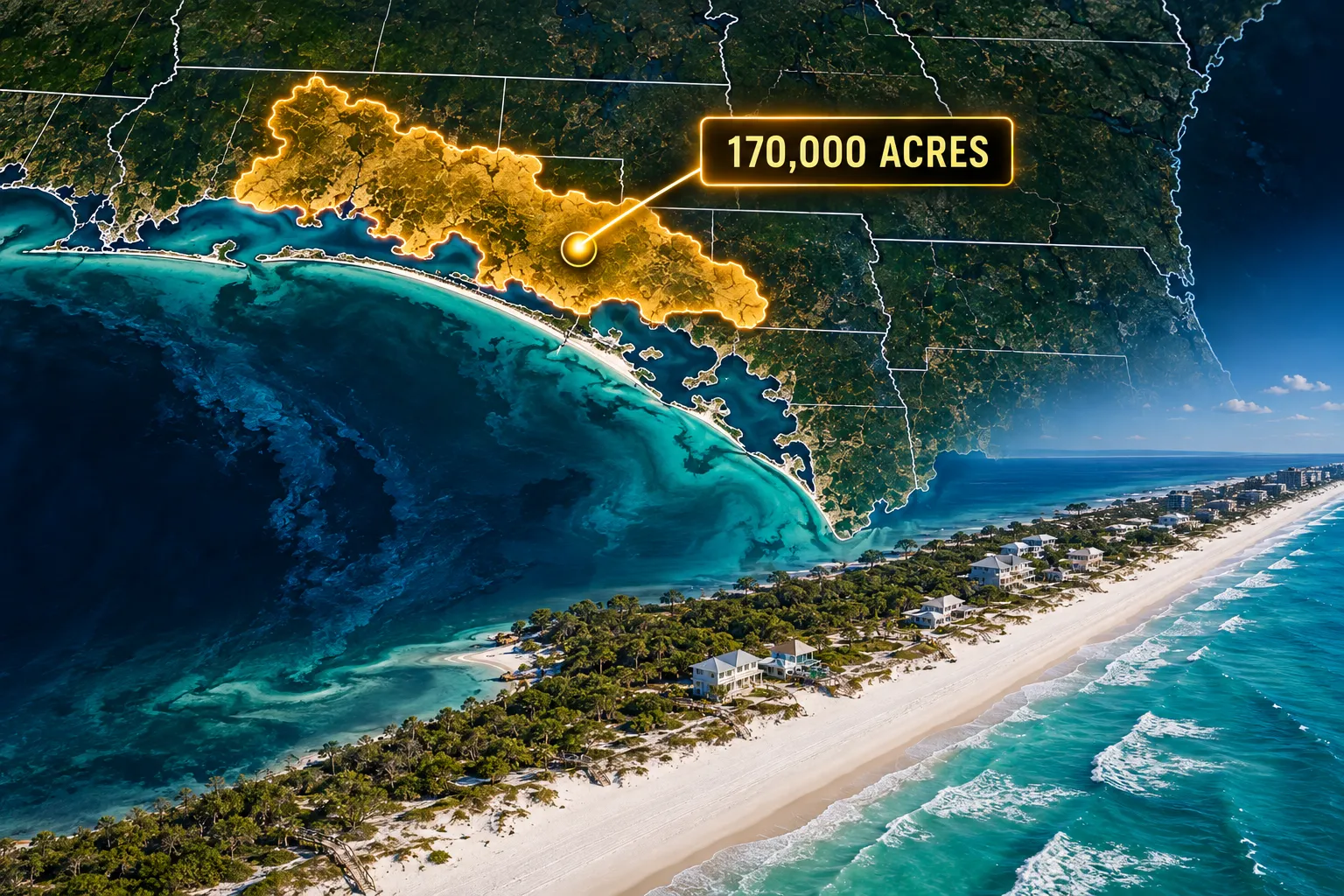
To give you a sense of size, that’s bigger than the entire city of Chicago.
Most of that land sits within 15 miles of the Gulf of Mexico. White sand beaches. Warm water. No state income tax.
For most of its history, this was a timber company. It cut down trees.
Then it realized something. The land was worth a lot more with houses on it than with pine trees on it.
So it became a developer. It builds towns. Neighborhoods. Hotels. Shopping centers. Marinas. It even donated the land for a whole new airport.
One of its biggest projects is a retirement community built for people 55 and older. Thousands of homes. Built for exactly the kind of person who’s leaving New Jersey for Florida.
This company doesn’t have to guess where the money is going. It’s already there, waiting, with the land under its feet.
And one of the most famous value investors in America agrees.
His fund owns roughly 40% of this company. He’s been buying for more than 15 years. He liked it so much he became chairman of the board.
He’s not trading it. He’s waiting. Because he’s betting on what that land will be worth when the migration reaches it.
Now, this is not like the other three.
It pays a small dividend. About 1%. You don’t buy this one for income.
You buy it because it owns something nobody can make more of. Coastal Florida land. In one of the fastest-growing states in the country.
And I need to be very clear about the risk.
This is a smaller company. Its stock can swing 30% or more in a year. It did in 2022.
Hurricanes hit the Panhandle. Home sales slow down when rates rise. Developing land takes years, and a lot can go wrong in years.
If you can’t stomach a big drop without selling, this one isn’t for you.
But land is what people ran to in the 1970s, too. And if you want to own a piece of the ground the Great Money Migration is landing on, I don’t know of a better way to do it.
This company is in your second report.
The Florida Landowner
Both reports are yours when you take a trial of my research service.
Let me tell you about it.
INTRODUCING:
takeover targets
Back in the early 1990s, I earned a reputation on Wall Street for one thing.
Picking stocks right before somebody bought the whole company.
Paramount, which Viacom bought three months after I recommended it, for a 100% gain.
US Reinsurance, bought out six months after I recommended it, for 70%.
Chase Manhattan, bought by Chemical Bank, for 78%.
Michigan National Bank, taken over for 83%.
I was 24 years old. And I was doing this before the internet boom, when you had to read the filings by hand.
That’s still what I do. And Takeover Targets is where I do it.
Every week, I look for the companies the big money is about to buy. The ones sitting on something a bigger player needs. Land. Pipelines. Mineral rights. Gold in the ground.
Because here’s what the Great Money Migration means for takeovers.
When $111 billion in income leaves New York and lands in the South, the companies that own what it needs become worth more to everyone. Including the giants who’d rather buy them than build from scratch.
The pipeline business has been consolidating for years. So has mineral rights. So has gold royalties. The biggest players keep buying the smaller ones.
Owning the right company before that happens is the whole game.
And the four companies I’ve shown you today are exactly the kind of assets the giants are buying.
Now, I want to be careful here. I’m not telling you any of these four will be taken over. Nobody can promise that.
What I can tell you is that they own what the migration needs, they get paid more when money gets expensive, and they’re the kind of businesses that get bought.
That’s three ways to win. And only one of them needs a buyer to show up.
Here’s what you get as a member of Takeover Targets.
THE GREAT MONEY MIGRATION REPORTS
The moment you join, you’ll get both reports I told you about today.
Report #1: “The Toll Booths of the South: 3 Companies That Get Paid More When Money Gets Expensive.” Value: $249
This report gives you the names, the ticker symbols, and my full analysis of The Power Line, The Royalty Collector, and The Gold Toll Booth. What they own. What they pay. What could go wrong. And exactly how I’d think about buying each one.
Report #2: “The Florida Landowner.” Value: $249
This is the full story of the company that owns 170,000 acres of the Florida Panhandle. Its history. Its projects. Its biggest shareholder. And the risks you need to understand before you buy a single share.
YOUR WEEKLY TAKEOVER TARGET
Every week, I’ll send you a new issue of Takeover Targets.
Each one names a company I believe is in the sights of a bigger buyer, with the full case for why. The numbers. The buyers who’d want it. What I’d pay. And what would make me walk away.
VALUE: $2,997
THE MODEL PORTFOLIO
Every recommendation goes into our model portfolio. You’ll see the date, the price, and exactly how it’s doing.
When it’s time to buy more, I’ll tell you. When it’s time to sell, I’ll tell you that, too.
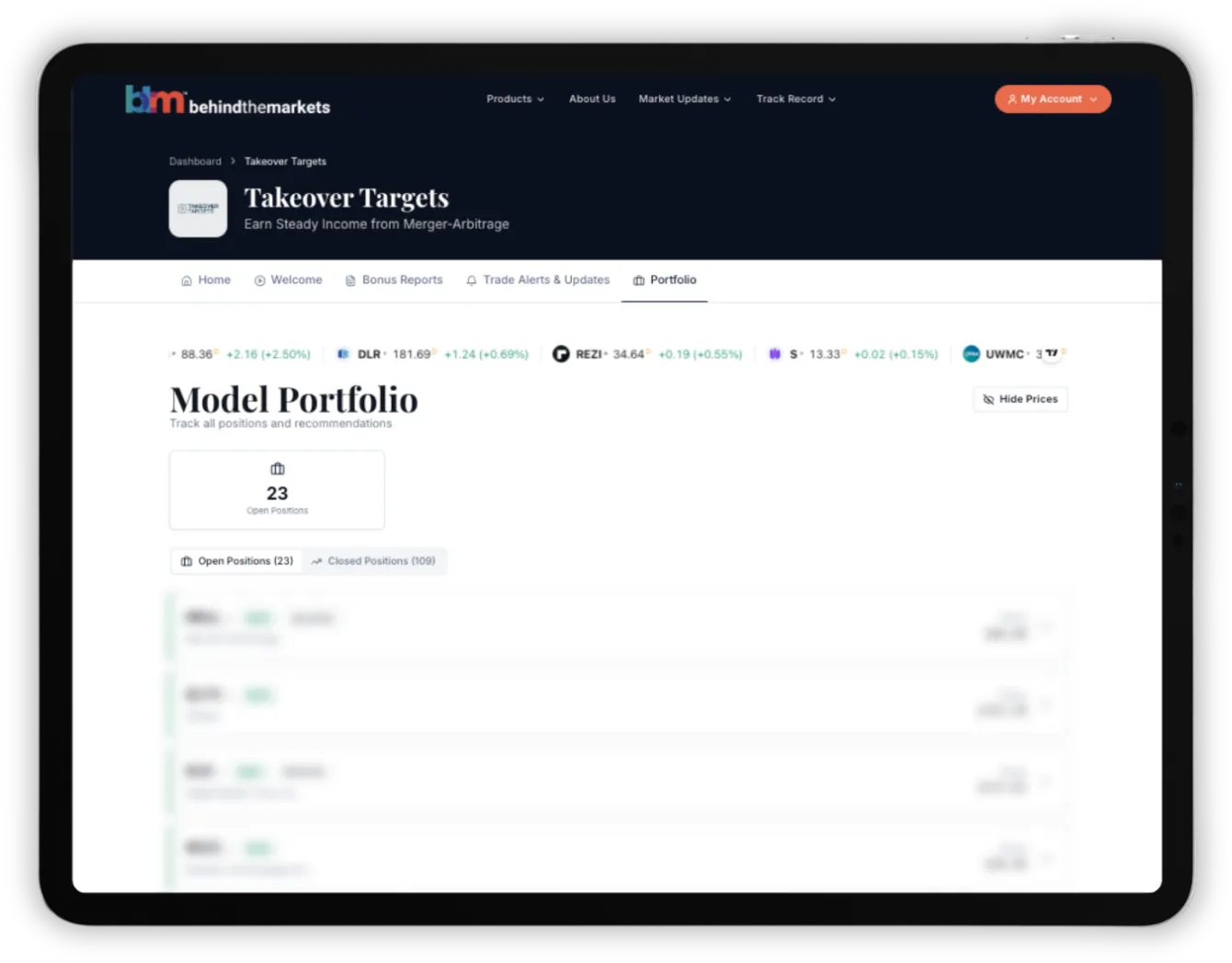
ALERTS
When something changes, you’ll hear from me. Not next month. That day.
If a buyer shows up for one of these companies, you’ll know. If a hurricane hits the Panhandle, you’ll know what it means. If a new tax passes in Albany, you’ll know who wins and who loses.
That’s the whole point. You’re not on your own anymore.

THE PRICE
Add it up and the reports and issues alone come to $3,495.
But you won’t pay that.
A one-year membership in Takeover Targets is $1,997.
That’s for a full year. Weekly issues. The model portfolio. Every alert. And both Great Money Migration reports.
I know that’s real money. It’s meant to be. Takeover Targets is not a newsletter for people who dabble. It’s for people who want to be in front of the biggest deals before they happen.
And it comes with a guarantee.
MY 30-DAY GUARANTEE

Take a full 30 days to read everything.
Read both reports. Read your first issue. Watch the model portfolio.
If at any point in those 30 days you decide Takeover Targets isn’t for you, contact my team. We’ll refund every penny.
And you keep everything you’ve read.
When you click that button, you’ll go to a secure order page. It takes about two minutes.
And on that page, there’s one more report waiting for you.
The Storage King
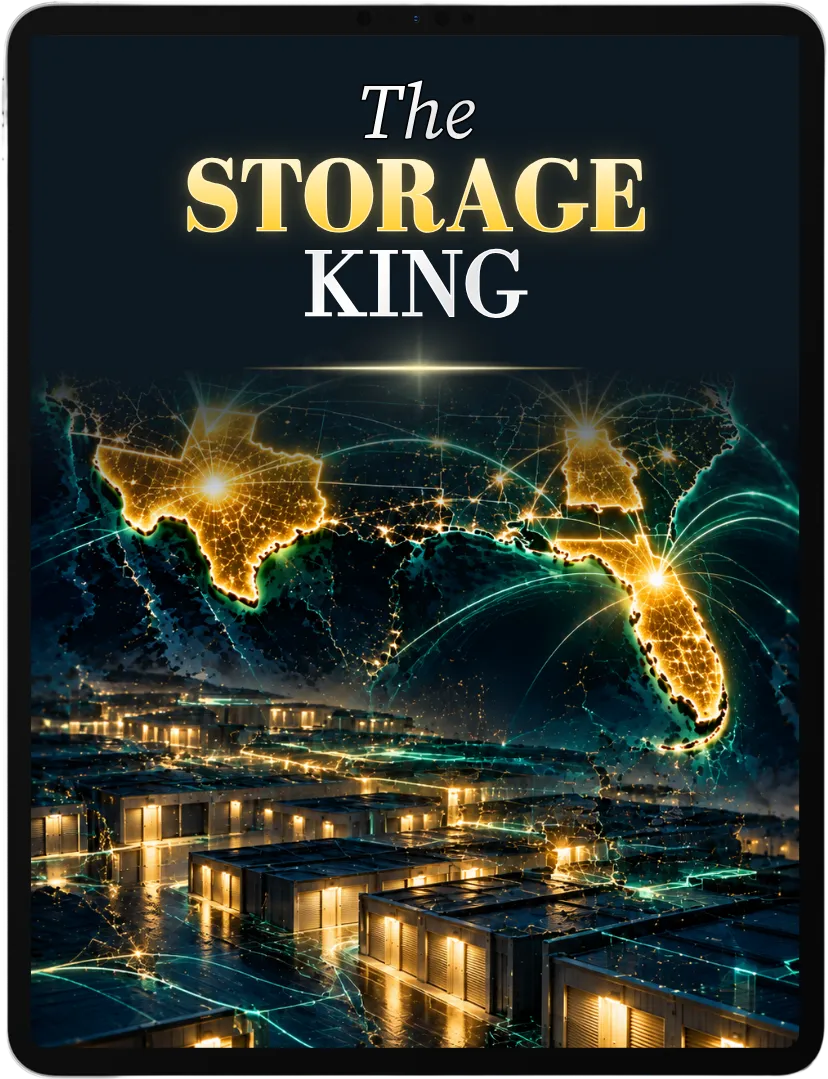
I’ve saved it for last because it’s the one pure play on the moving trucks themselves.
When a family packs up a house in New Jersey and heads for Tennessee, what’s the first thing they rent when they get there?
Not a house. Not an apartment.
A storage unit.
This company owns more storage locations than anyone in America. About 4,000 of them. And it’s heaviest in Florida, Texas, and Georgia. Right where the trucks are heading.
Here’s why I like it in a world of rising prices.
Storage leases are month to month. When inflation comes, this company raises the rent next month. Not in ten years when the lease expires. Next month.
That makes it different from almost every other landlord in America.
And here’s the takeover angle. Storage is one of the most consolidated businesses in real estate. The biggest players have spent billions buying up smaller chains. This company became the biggest in America by doing exactly that.
Now, the honest part. It’s still a real estate company. When rates jumped in 2022, the stock fell hard. And storage lives on people moving, so when home sales slow, so does business.
That’s why it’s not in the main report. It’s the one I want you to own after the migration has pushed rates and rents higher, not before.
I’ll tell you exactly when in the report. It’s yours free on the order page.
So here’s everything you get today:
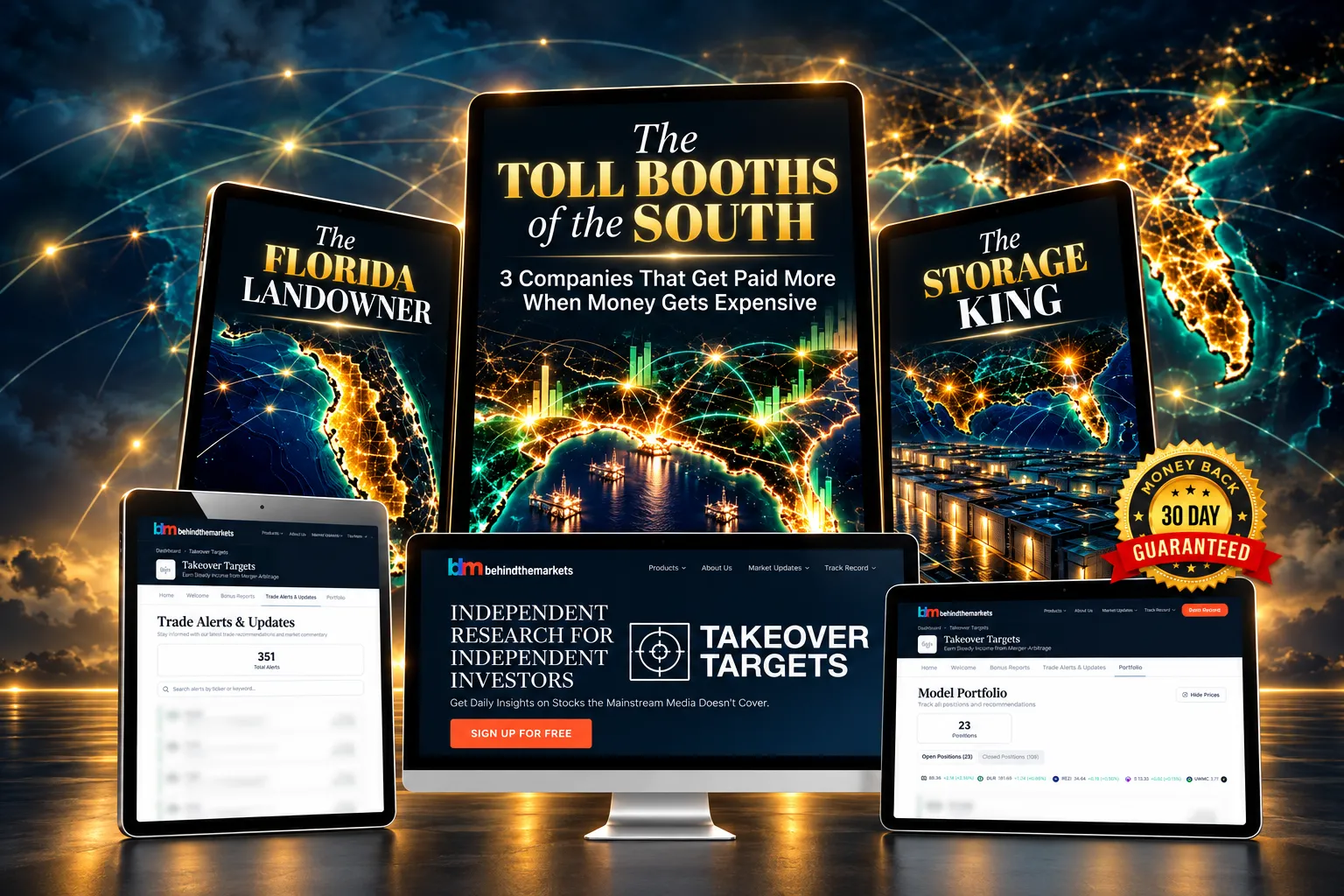
- Report #1: The Toll Booths of the South (Value: $249)
- Report #2: The Florida Landowner (Value: $249)
- Bonus Report: The Storage King (Value: $249)
- Weekly issues of Takeover Targets (Value: $2,997)
- The model portfolio
- Every alert, the day it happens
- A full 30-day money-back guarantee
ONE LAST THING
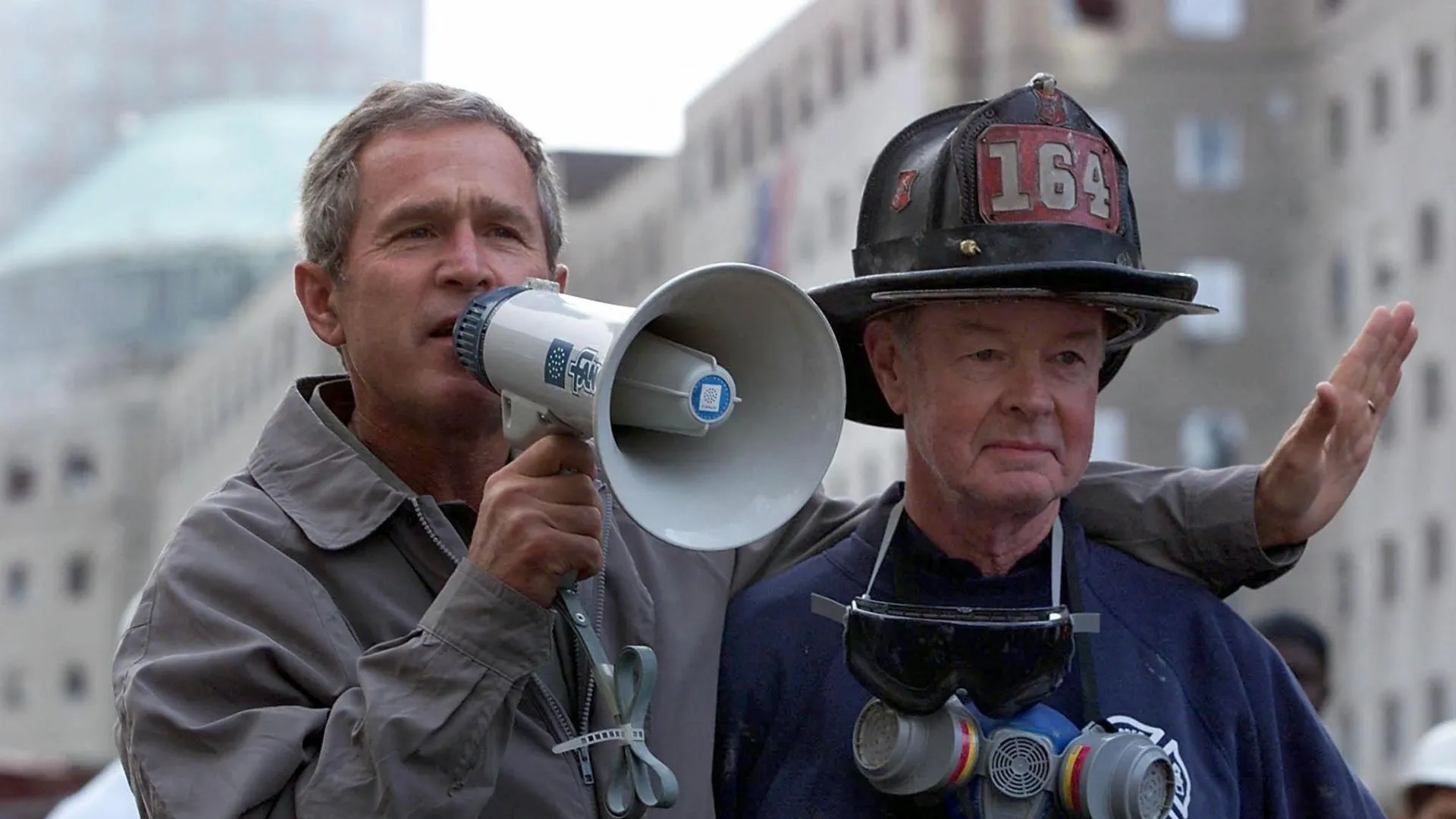
On September 14, 2001, three days after the attack, President Bush came to New York.
He stood on the rubble with the firefighters. Someone handed him a bullhorn.
A man in the crowd yelled that he couldn’t hear him.
And the President said this:
“I can hear you. The rest of the world hears you. And the people who knocked these buildings down will hear all of us soon.”
— PRESIDENT GEORGE W. BUSH
I’d spent that week downtown, trying to help. I hadn’t slept much.
When I heard those words, I started to cry.
I think about that moment a lot now.
Because 25 years later, the man who planned that attack has a new audience. His letter went viral on TikTok. A man who once said America “deserved” it has a show with millions of fans. And the city they attacked has a mayor who calls a man from that history a “pillar.”
The country I ran through that day has changed.
But here’s what hasn’t.
Money still goes where it’s treated well. People still move toward freedom. And the folks who own where they’re going still get paid.
That’s not politics. That’s just how it works.
You can stand on the side that’s leaving. Or you can stand on the side that’s collecting the rent.
I know which side I’m on.
I hope you’ll join me.
I’m Dylan Jovine. Thank you for joining me today.